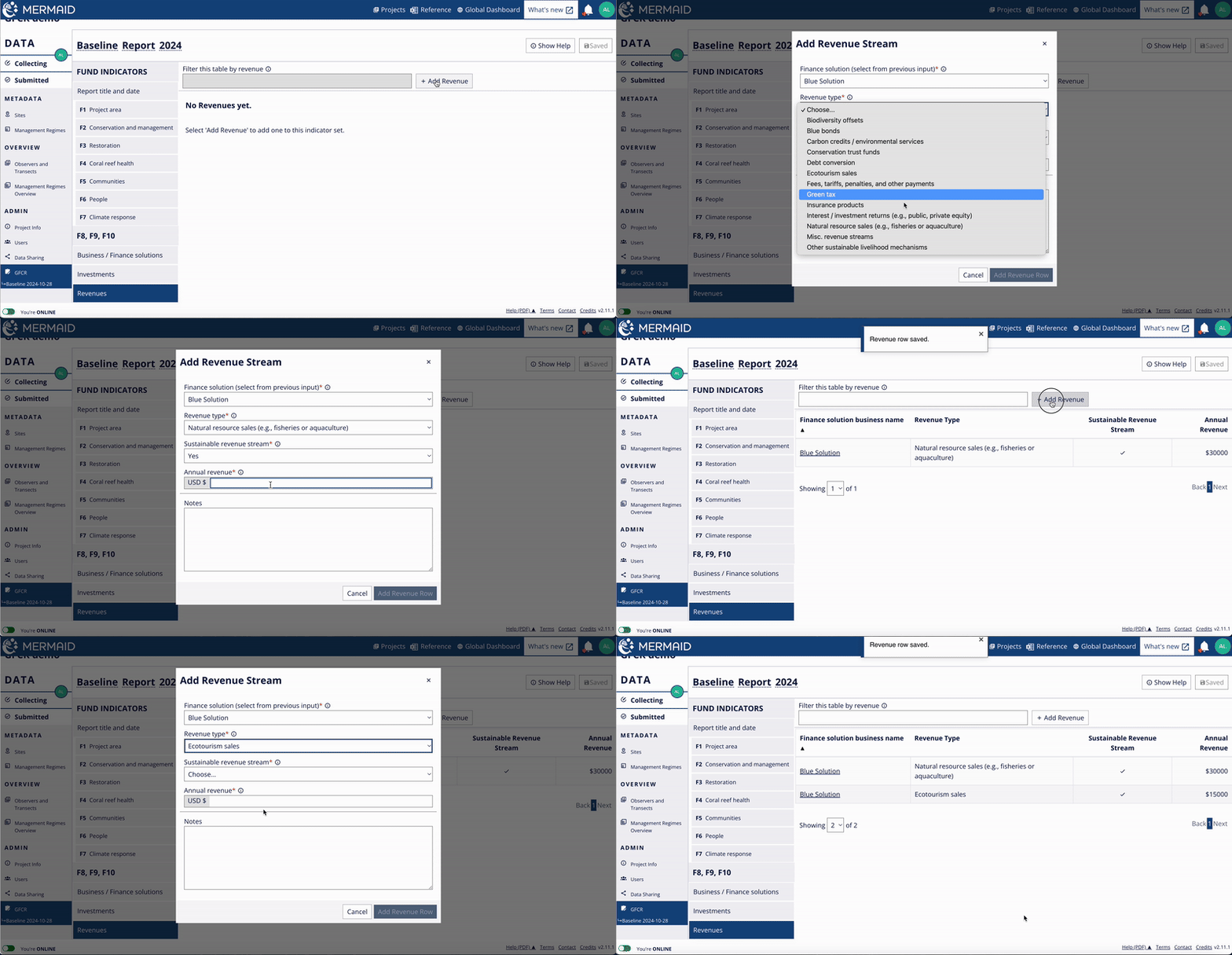
Entering data for Fund Indicators F8-F10
Facilities / Solutions
Each facility, reef-positive business, reef-positive financial mechanism, or programmatic co-financing in your GFCR Program should be entered separately.
Important: For Fund Indicators F8, F9, F10, data is disaggregated by facility, solution, and programmatic co-financing: technical assistance facility (TAF), conservation trust fund (CTF), financial facility, reef-positive business solution, reef-positive financial mechanism solution, and programmatic co-financing. |
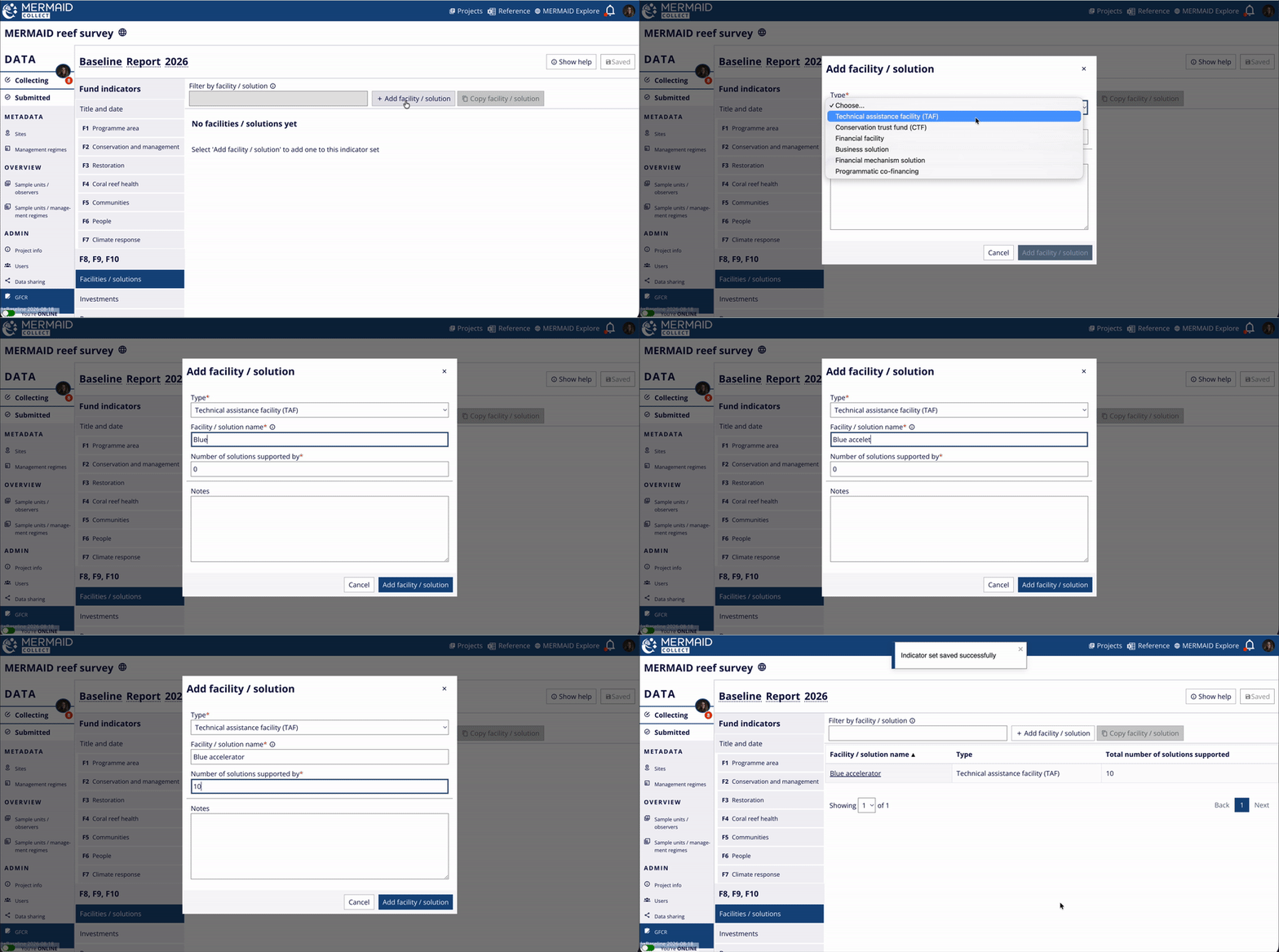
To enter a new technical assistance facility (TAF):
Go to + Add Facility / solution and select Technical assistance facility (TAF) in the Type field.
Enter TAF name in the Facility / solution name field.
Enter the total number of solutions (i.e. businesses and financial mechanisms) that the TAF is supporting.
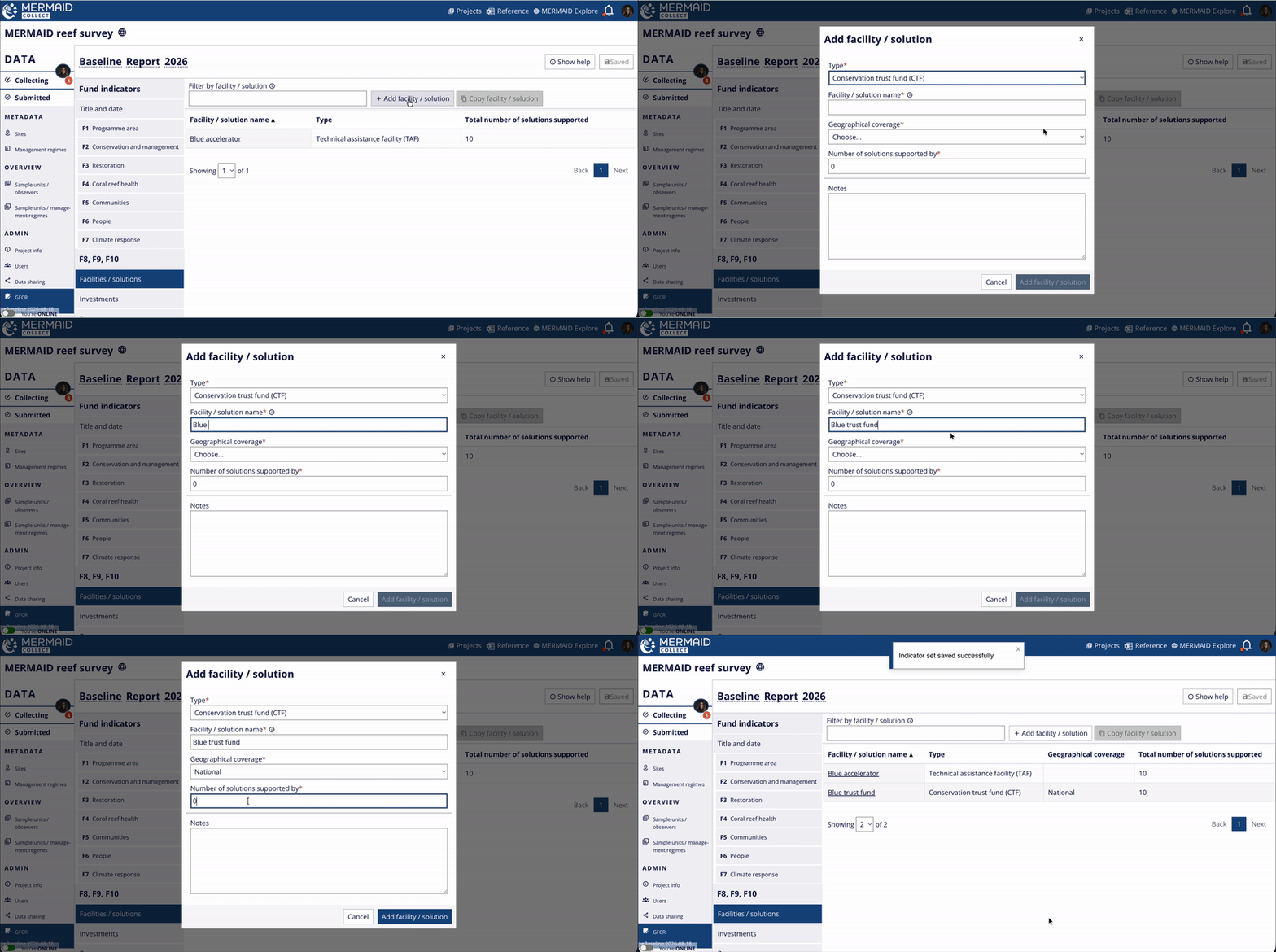
To enter a new conservation trust fund (CTF):
Go to + Add Facility / solution and select Conservation trust fund (CTF) in the Type field.
Enter CTF name in the Facility / solution name field.
Select whether the CTF works at the regional, national, or subnational level in the Geographic coverage field.
Enter the total number of solutions (i.e. businesses and financial mechanisms) that the CTF is supporting.
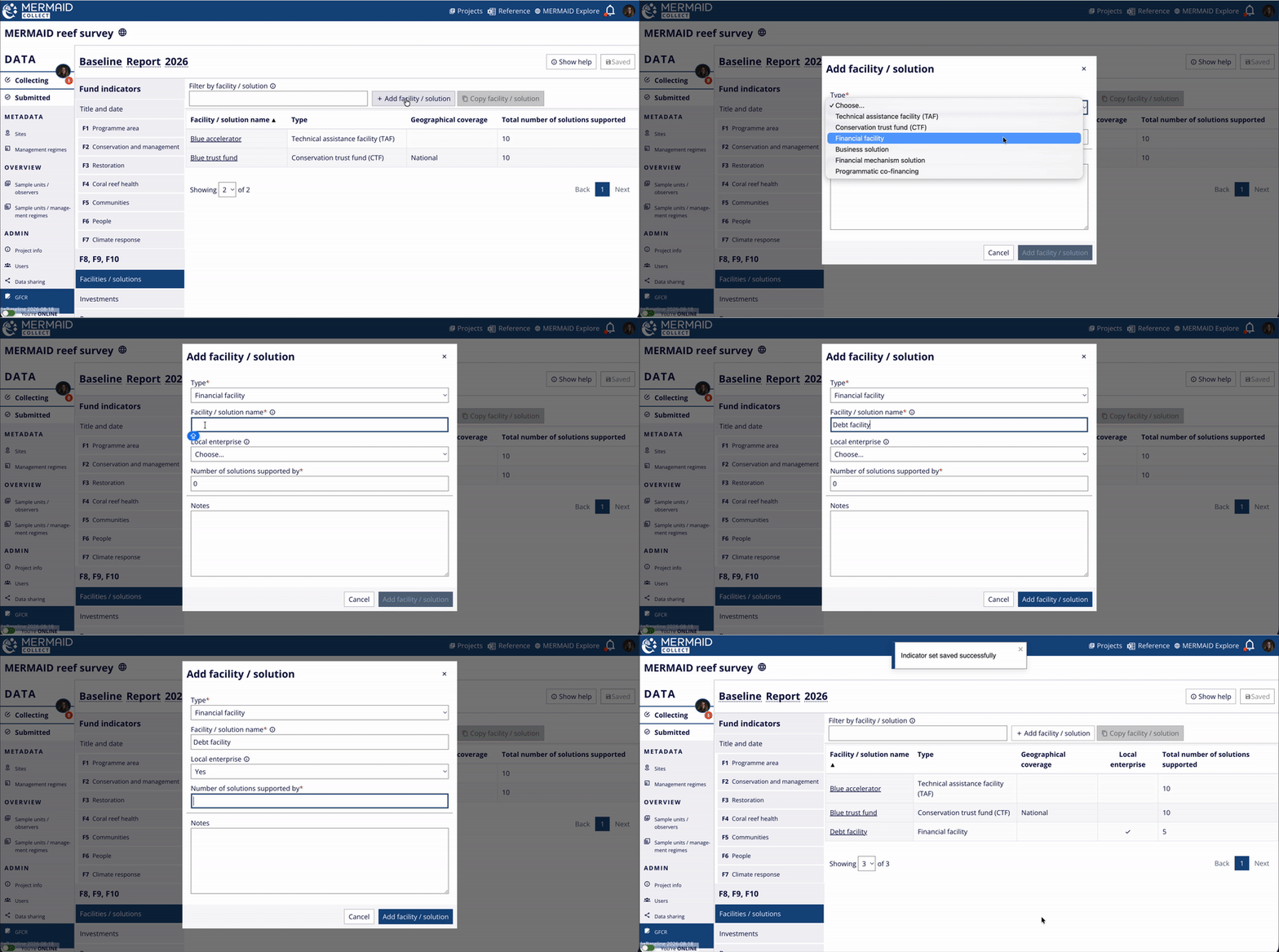
To enter a new financial facility:
Go to + Add Facility / solution and select Financial facility in the Type field.
Enter financial facility name in the Facility / solution name field.
Choose Yes or No to indicate whether the solution is a local enterprise in the Local enterprise field.
Enter the total number of solutions (i.e. businesses and financial mechanisms) that the financial facility is supporting.
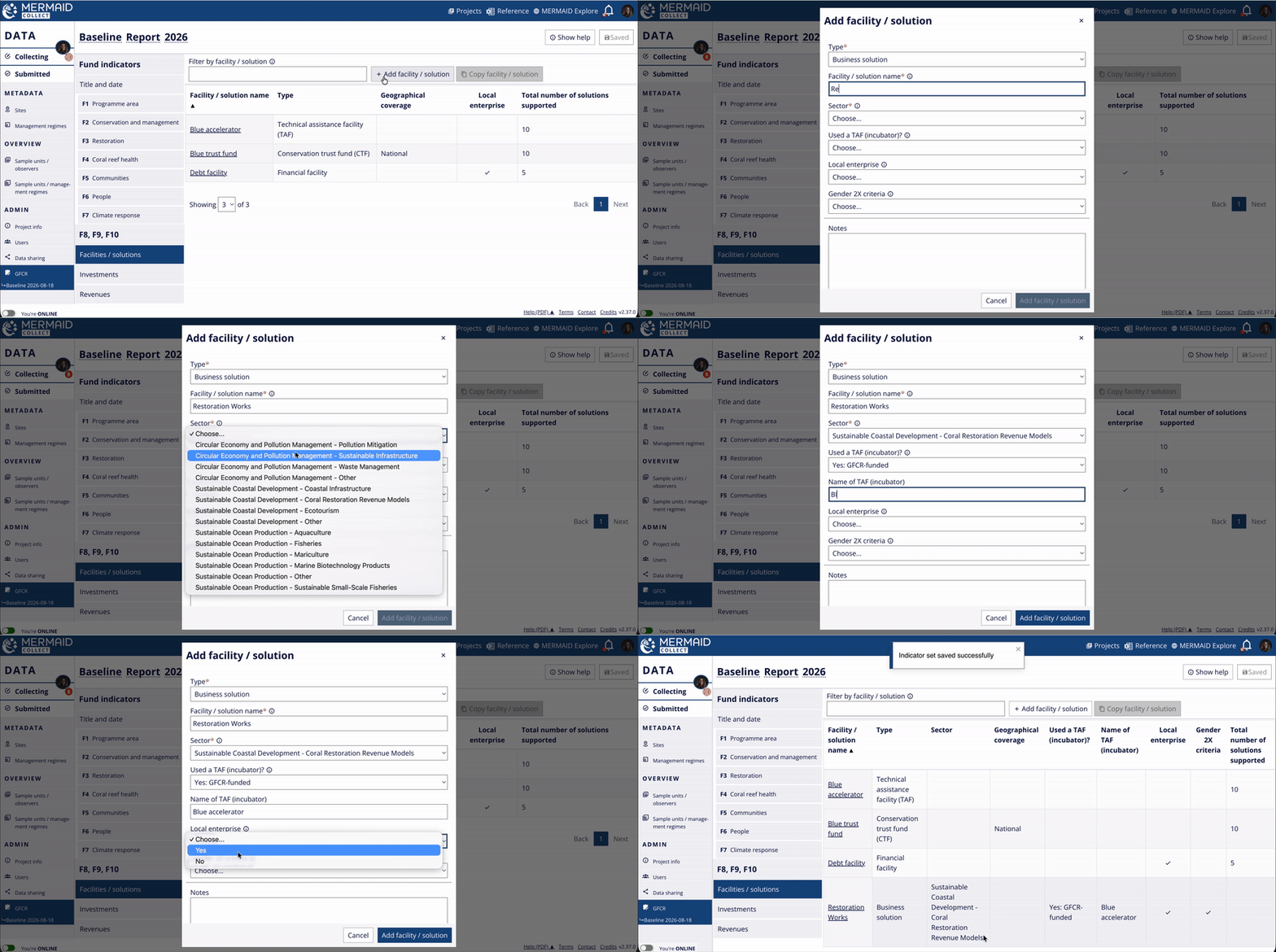
To enter a new business solution:
Go to + Add Facility / solution and select Business solution in the Type field.
Enter business name in the Facility / solution name field.
Select sector from dropdown options in the Sector field.
Sectors
Sustainable Ocean Production
Fisheries / Aquaculture / Mariculture / Sustainable Small-Scale Fisheries / Marine Biotechnology Products / Other
Sustainable Coastal Development
Ecotourism / Coastal Infrastructure / Coral Restoration Revenue Models / Other
Circular Economy and Pollution Management
Sustainable Infrastructure / Waste Management / Pollution Mitigation / Other
In the Used a TAF (incubator)? field, choose Yes: GFCR-funded, Yes: non-GFCR-funded or No to indicate whether an incubator was used for development and identify its funding source.
If your solution utilized an incubator before the start of the GFCR Program, you should select 'No' for this field—unless the solution is also using a GFCR-funded incubator during the Program period.
If you selected Yes: GFCR-funded or Yes: non-GFCR-funded, enter the official registered name of the TAF (incubator).
Choose Yes or No to indicate whether the solution is a local enterprise in the Local enterprise field.
Choose Yes or No to indicate whether the solution uses the Gender 2x Criteria in the Gender 2x Criteria field.
Each business solution should be well-acquainted with the Gender 2X Challenge and its Criteria. An assessment can be conducted to determine whether the solution meet these Criteria thresholds here.
While GFCR does not mandate a 2X Certification, it expects solutions to strive toward meeting these standards and to evaluate their alignment with the 2X criteria.
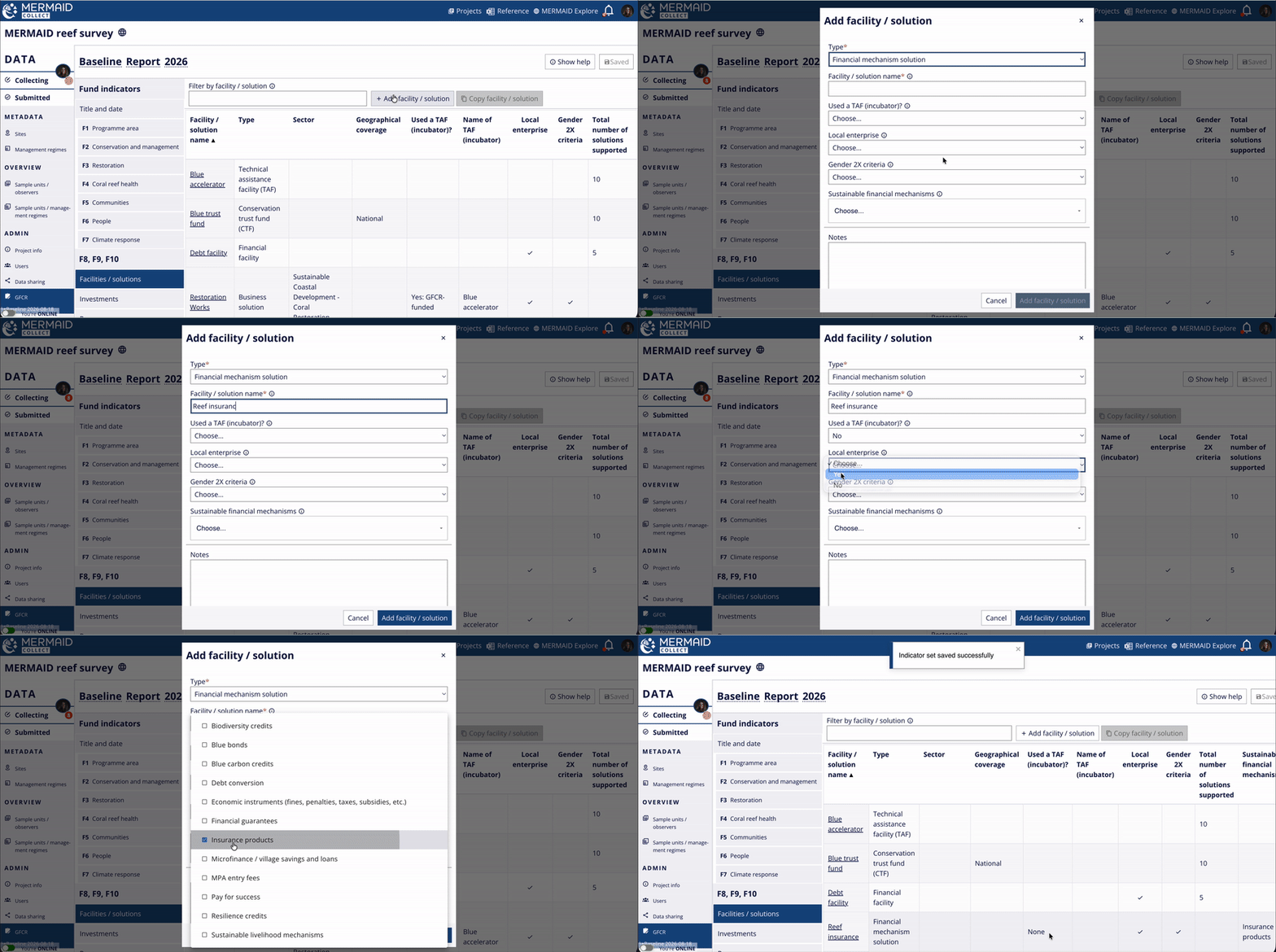
To enter a new financial mechanism solution:
Go to + Add Facility / solution and select Financial mechanism solution in the Type field.
Enter financial mechanism name in the Facility / solution name field.
In the Used a TAF (incubator)? field, choose Yes: GFCR-funded, Yes: non-GFCR-funded or No to indicate whether an incubator was used for development and identify its funding source.
If your solution utilized an incubator before the start of the GFCR Program, you should select 'No' for this field—unless the solution is also using a GFCR-funded incubator during the Program period.
If you selected Yes: GFCR-funded or Yes: non-GFCR-funded, enter the official registered name of the TAF (incubator).
Choose Yes or No to indicate whether the solution is a local enterprise in the Local enterprise field.
Choose Yes or No to indicate whether the solution uses the Gender 2x Criteria in the Gender 2x Criteria field.
Each solution should be well-acquainted with the Gender 2X Challenge and its Criteria. An assessment can be conducted to determine whether the solution meet these Criteria thresholds here.
While GFCR does not mandate a 2X Certification, it expects solutions to strive toward meeting these standards and to evaluate their alignment with the 2X criteria.
Select all the mechanisms that apply from the available options in the Sustainable financial mechanisms field.
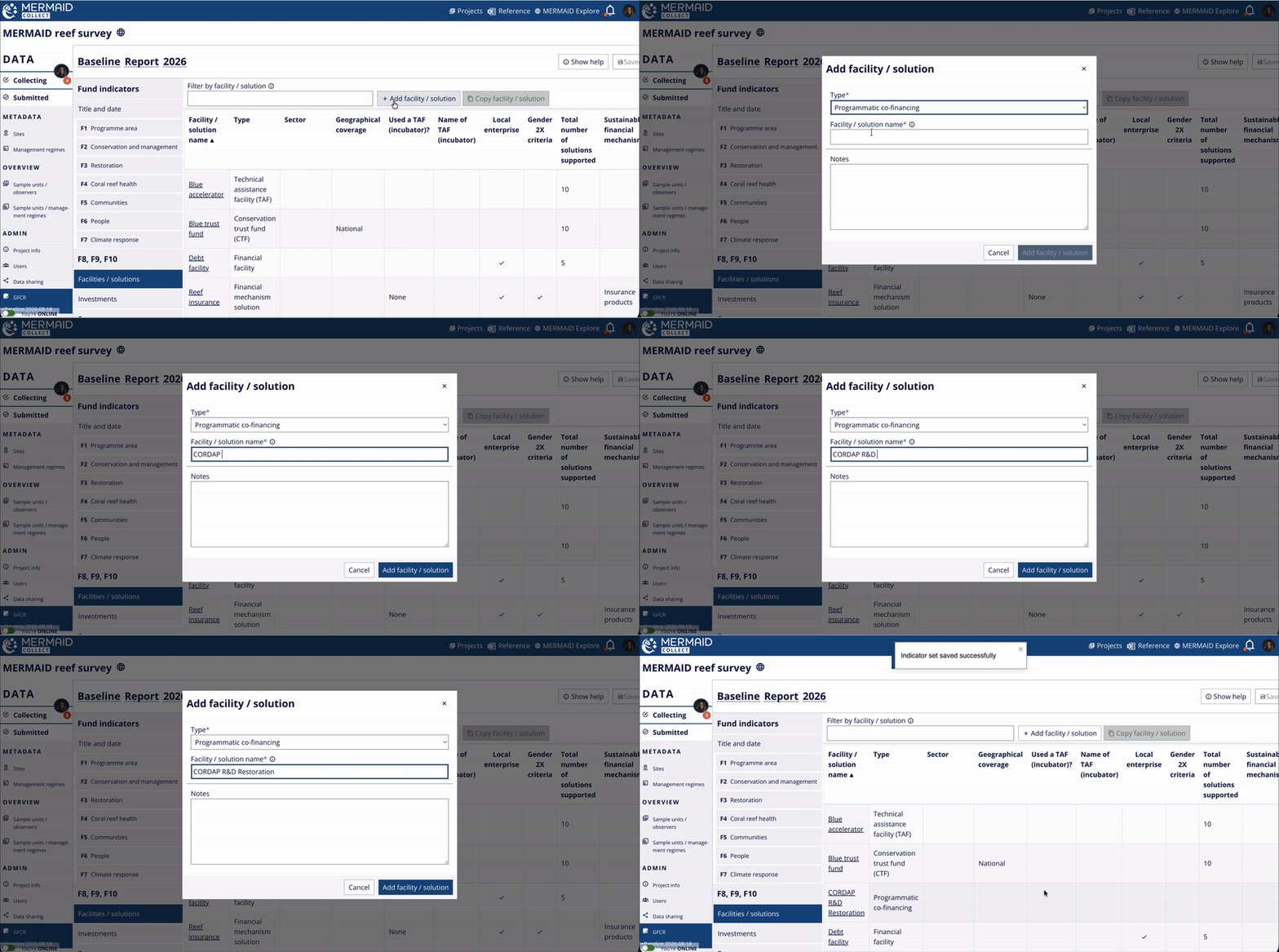
To enter a new programmatic co-financing:
Go to + Add Facility / solution and select Programmatic co-financing in the Type field.
Enter programmatic co-financing name in the Facility / solution name field.
Identifying the cycle stage (e.g., launch, growth, maturity) of each facility, solution, and programmatic co-financing is important and can be documented in the Notes field for each entry, as well as in the annual narrative report. This would give more context for determining success against investments and revenues.
You will have access to a list of all the entries added on the Facilities / solutions page. You can make changes to any entry in this list at any time by clicking on each entry.
As new facilities, solutions, and programmatic co-financing are added to the Program, include them in your subsequent reports.
Investments
The GFCR Program categorize investments into three distinct stages: anticipated, committed, and secured.
Secured – investment funds transferred and are with the Convening Agents.
Committed – contract or agreement signed but funds have not yet been transferred. There is a formal obligation to provide funding for a certain period, but the funds have not been deployed yet.
Anticipated – funding expected or planned to occur in the future and discussions are underway, but no formal agreement has been signed.
Convening agents should report only secured or committed funds in Collect as data for Fund Indicators F 8.1, F 8.2, F 8.3 or F 9.1 – meaning that there is a signed agreement or the funds have already been received. Anticipated funds can be reported in the annual narrative reports.
Important: You will enter both committed and secured investments for each facility / solution entry from your GFCR Program separately and disaggregated by investment source (i.e., GFCR, philanthropy, private, public) and type. Only report investments for facilities (i.e., technical assistance facility (TAF), conservation trust fund (CTF), or financial facility) if they were exclusively used by the facilities themselves, and not by the reef-positive businesses or financial mechanisms they support. |
To add a new investment:
Go to + Add investment to add a new investment for an individual facility, solution, or programmatic co-financing.
Important: Any grant or other form of monetary programmatic co-financing should be reported as an investment, not as revenue.
In Facility / solution name, choose from the list of previously added entries. Remember, you will report investments for each facility, solution, or programmatic co-financing.
Choose the source from the dropdown options (i.e., GFCR, Philanthropy, Private and Public) in the Investment source field.
If a solution receives investment from multiple sources (e.g., both GFCR and private), you will need to enter each investment separately for this solution (e.g., once for the GFCR investment and once for the private investment).
Choose the type from the dropdown options in the Investment type field.
If a solution receives multiple types of investment from a single source (e.g., a grant and technical assistance from GFCR), you will need to enter each type separately under that specific investment source for the solution—for example, once for the grant and once for the technical assistance from GFCR.
Enter the accumulated investment amount in the Investment amount field.
Note: Report committed or secured investments as cumulative totals across all reporting periods since the start of the GFCR Program. If there are no new investments for a given report, simply enter the last reported investment amounts.
If available, please add cumulative anticipated investment amounts to the Notes section and ensure they are included in your annual narrative reports.
You will have access to all the investments listed on the Investments page. You can modify these entries at any time.
![Animated GIF showing the Add investment form with fields for facility or solution, investment source, type, and amount.]](/assets/tutorial/gfcr/investments_eng.gif)
Revenues
Important: For your GFCR Program, you will enter the revenues for each solution separately, disaggregated by revenue type. Revenues for individual solutions should be reported independently and only once to prevent double counting. |
Do not enter revenues for finance facilities, such as conservation trust funds, incubator / technical assistance facility, or revolving finance facility.
To add a new revenue:
Go to + Add revenue to add a new revenue stream for a solution.
In Facility / solution name, choose the solution from the list of solutions previously created. Remember, you will report revenues for each solution.
Choose the type from the dropdown options in the Revenue type field.
If a solution receives revenues from multiple streams (e.g., both biodiversity offsets and blue bonds), you will need to enter each revenue stream separately for this solution (e.g., once for the biodiversity offsets and once for blue bonds).
Choose Yes or No to indicate whether the revenue is sustainable in the Sustainable revenue stream field.
Enter the accumulated revenue amount for the reporting period in the Revenue amount field.
Note: Report revenues as cumulative totals across all reporting periods since the start of the GFCR Program. If there are no new revenues for a given report, simply enter the last reported revenue amounts. Do not report revenues for facilities (i.e., technical assistance facility (TAF), conservation trust fund (CTF), or financial facility) unless they were exclusively generated by the facilities, and not by the reef-positive businesses or financial mechanisms they support. |
You will have access to all the revenues listed on the Revenues page. You can modify these entries at any time.
If your GFCR Program has a GFCR-funded finance facility, it is highly recommended to track and report on solutions even after they exit your GFCR-funded facility. Doing so helps demonstrate the long-term impact and return on investment beyond the initial funding period. By monitoring post-incubation success, you can attract further investment opportunities and showcase the added value of the solutions, which is crucial for sustaining growth and scaling beyond 2030.